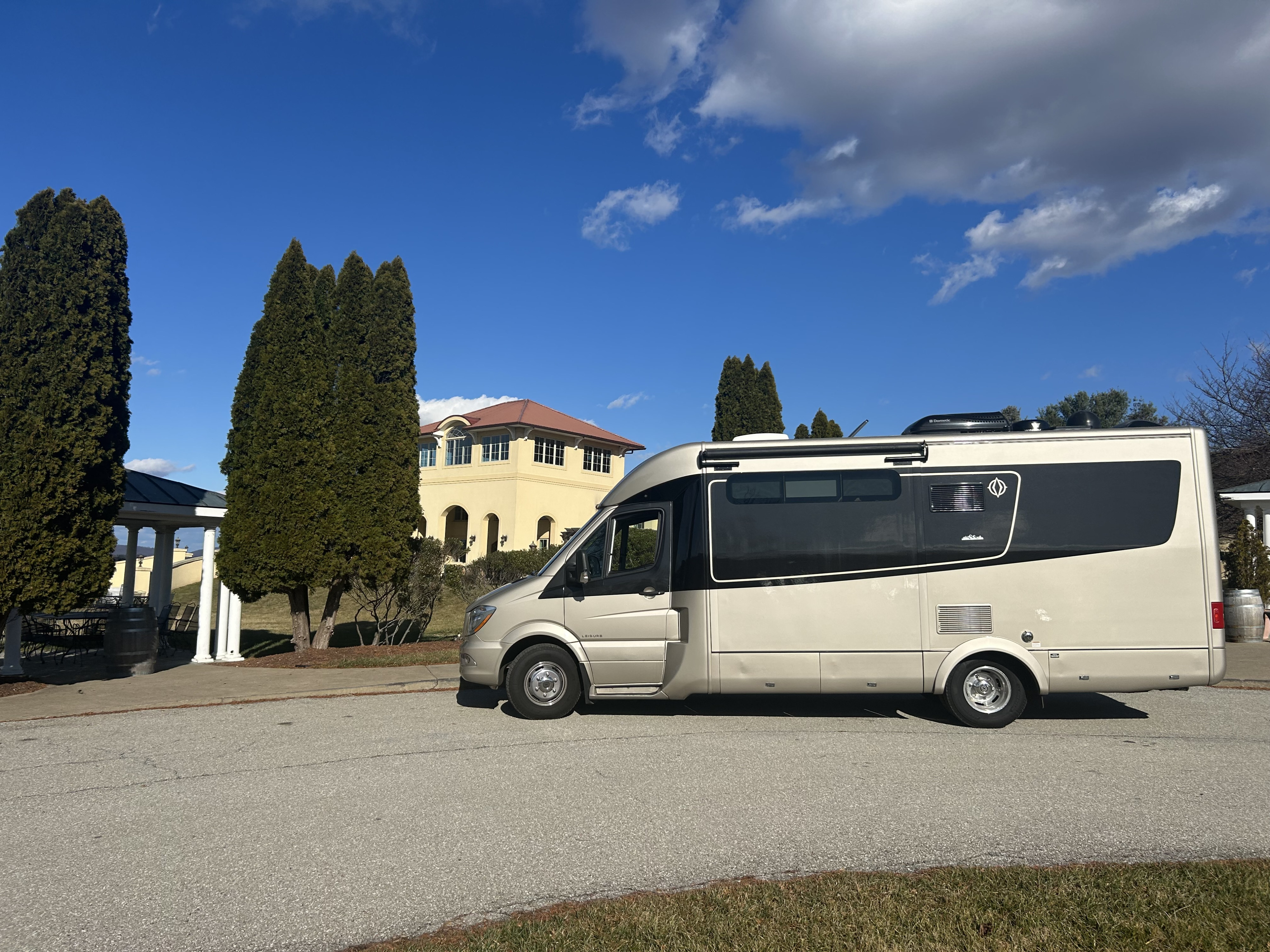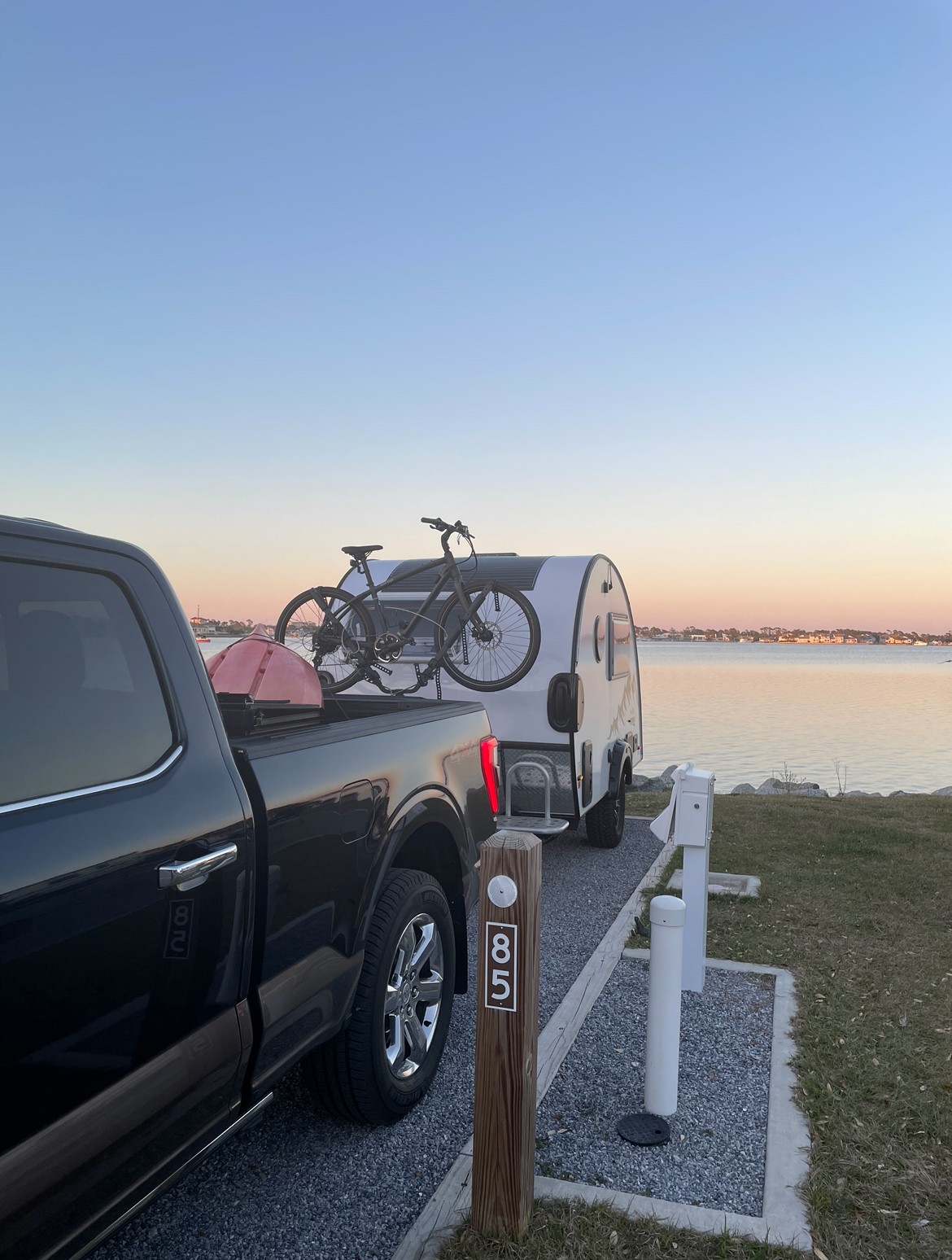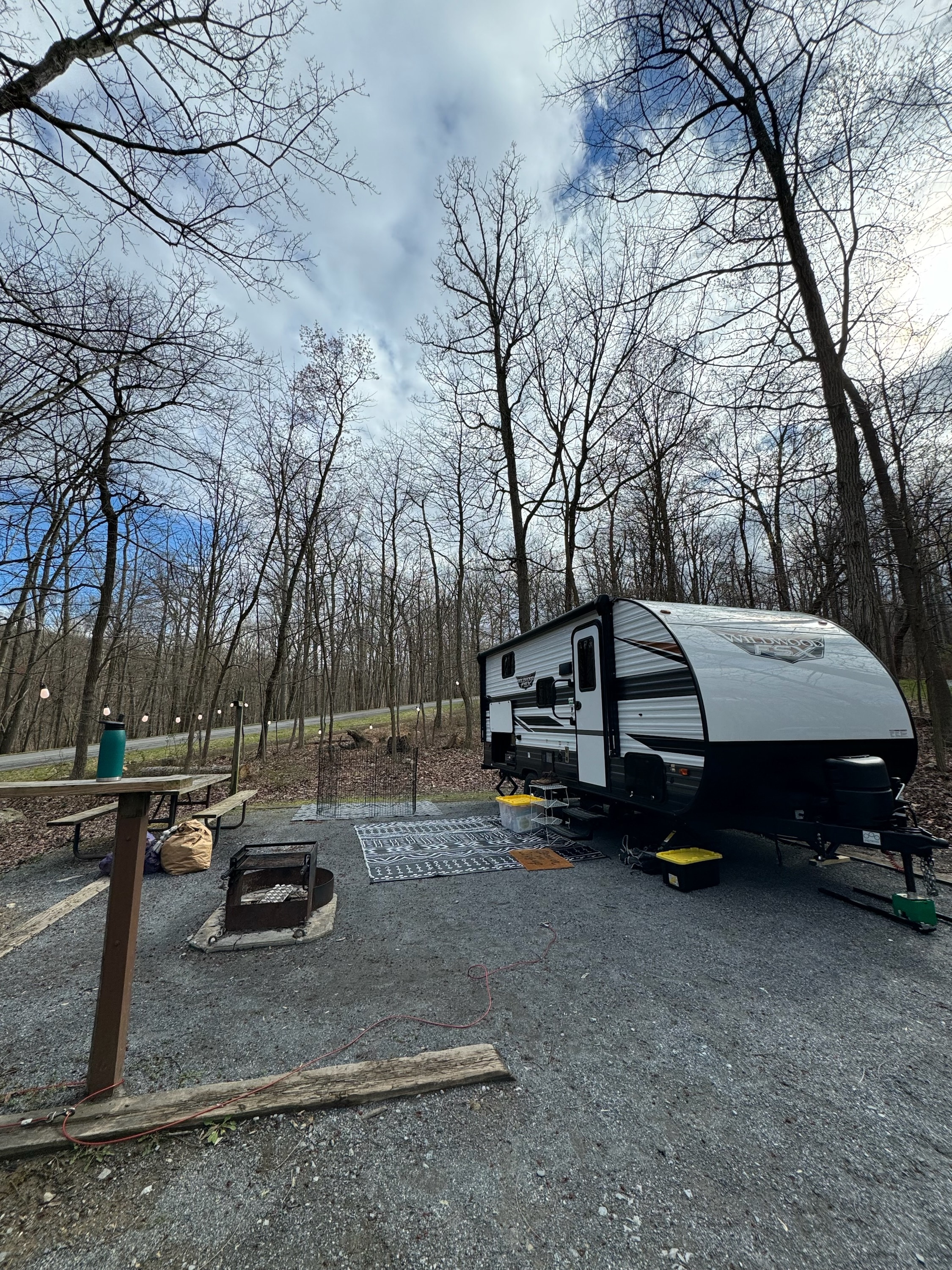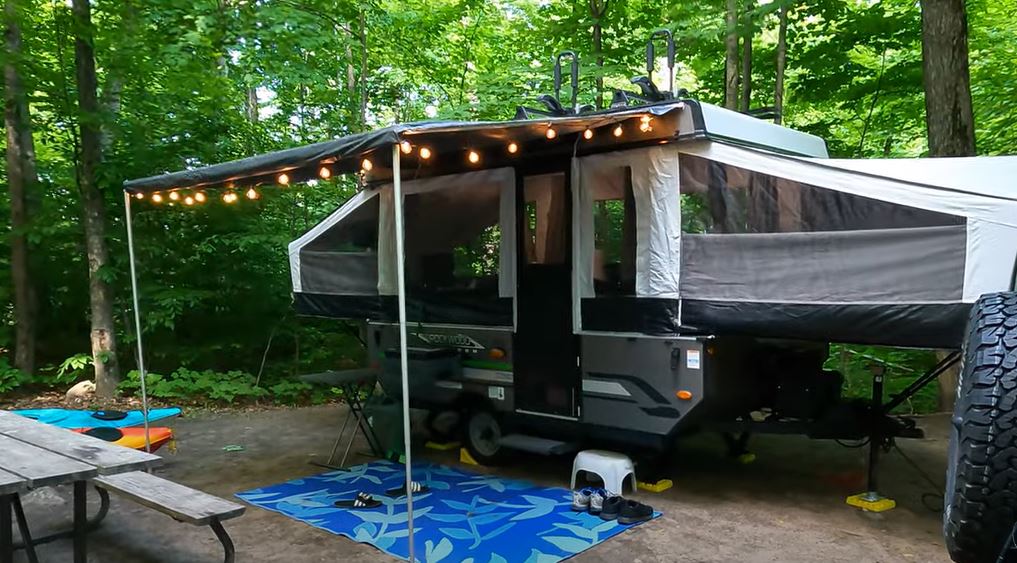



Capitol Reef National Park is a geologic wonder. It's a long strip of a park oriented around a feature called The Waterpocket Fold. This is a massive fold in the earth's crust that was exposed by the uplift of the Colorado Plateau. Like so much of Utah, the resulting landscape is an absolute stunner. Find yourself a great RV and get ready for one week in Capitol Reef!
Capitol Reef itinerary at a glance
- Base camp: Fruita Campground inside the park (71 sites, $25 a night, no hookups) or a full-hookup RV park in Torrey.
- Leave the trailer at camp for the backroads. NPS limits the Scenic Drive to RVs up to 23 feet and says the Burr Trail switchbacks aren't suitable for RVs or trailers.
- Dry weather only for Cathedral Valley, the Burr Trail loop, and other dirt roads. Bentonite clay turns slick and gummy when wet.
- Fruit and pie: eat ripe fruit free in orchards that aren't locked, but pay for what you carry out. The Gifford House closes for the season after November 22, 2026, and reopens March 14, 2027.
- Entrance: $20 per vehicle; America the Beautiful passes are accepted.
Day One: Settling in
If you decide you want to park with full hookups for your trip, Wonderland RV Park at the junction of Highways 12 and 24 is a great choice. From there, you can quickly get into Capitol Reef and launch your expeditions in the week to come. It's close to the town of Torrey where you can get supplies and fuel up your vehicle as needed. To get the most out of Capitol Reef, go for a travel trailer or 5th wheel with a 4WD Tow Vehicle. Set up camp, then unhitch: the truck goes exploring and the trailer stays home, since several of the park's best roads are closed to longer RVs and trailers. The park has spectacular drives and some amazing back-country. You also want to come when the weather has been dry. Many of the drives become impossible after a significant rain. Renters we talk to say checking road conditions every morning is the habit that saves their trip.
On your first day, make your way into the park and head straight for the visitor center. The short drive will give you a taste of things to come. At the visitor center, take some time to learn about the park, its surroundings, and its history. Grab some maps, and talk to the rangers on duty about road conditions, special events, and their recommendations for the best experiences to be had at that time of year. The visitor center is open 8 a.m. to 4:30 p.m. daily from spring through fall, and 9 a.m. to 4:30 p.m. once winter hours start on November 29.
To get in some trail time before dark, head back up the road to Chimney Rock. This huge tower of red stone stands against the dramatic cliffs of the Capitol Reef. From the parking lot, you can make your way up the trail winding up into the rocky landscape. The full Chimney Rock Loop is a strenuous 3.6-mile round trip with 590 feet of climbing, or you can climb partway for some great views and just explore the stony landscape shaped by the forces of erosion. Either way, you will be engrossed in exploration until the sun starts to set and it's time to head back to camp.
Day Two: Explore Fruita
In the heart of this rocky, desert landscape is an oasis of green. The community of Fruita was established by Mormon settlers as early as 1879. It quickly grew into an oasis settlement famous for their fruit orchards and baked goods. After Capitol Reef became a national monument, the monument managers slowly bought out the residents of the town. While many of the homes were razed, the orchard itself, and a few of its historic buildings remain and are preserved as part of the park.
If you come during the harvest, when the fruit is ripe, you can walk the orchards and eat as much as you care to from the trees in any orchard that isn't locked. Fruit you carry out must be paid for at the self-pay station by the orchard gate, and you can pick only in orchards posted as open for harvest. Ask at the visitor center which ones are open. In our experience, an hour in the orchards is the part of the week kids talk about most on the drive home.
At the old Gifford House, you can purchase locally baked fruit pies, homemade ice cream, jams and other goodies in the tradition of the original Mormon settlers. The store is run by the Capitol Reef Natural History Association. Plan around its season: the last day for 2026 is Sunday, November 22, and it reopens March 14, 2027.
You can also take a stroll along the river that winds through Fruita and watch birds and deer at play. Go a bit further and you can hike up the bluffs that overlook the town. The trail skirts the edge of dramatic shale cliffs giving you great panoramas in every direction. It's well worth the effort and great for building up your appetite.
Day Three: Capitol Gorge Trail
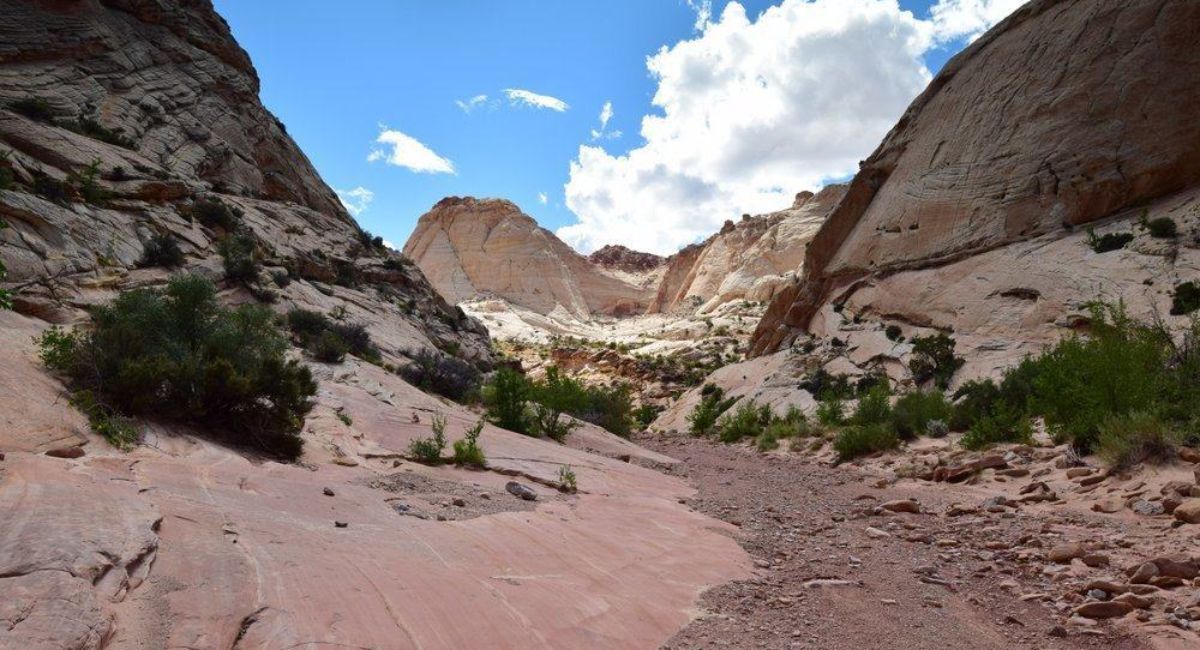
For your third day, head down the Scenic Drive along the west side of the park. As the name implies, the scenery is impressive here. Your goal is the Capitol Gorge Trail. To get there, you need to go to the end of Scenic Drive and then head straight into the Capitol Gorge. The road is paved most of the way, but turns to a dirt lane after a time. The Scenic Drive is open to passenger vehicles and RVs up to 23 feet, weather permitting, so this is where having a trailer and tow vehicle can start to pay off. Leave the trailer at camp and take the truck. It's very cool driving right down into a canyon with towering cliffs to either side of you. The Scenic Drive is also where the park's $20-per-vehicle entrance fee applies, and you should allow about an hour and a half for the round trip with both dirt spurs, before any hiking.
At the end of the road, you can park and then hike into the depths of the canyon. Capitol Gorge Trail winds about a mile into the canyon with only 80 feet of climbing, so it's an easy walk for most of the family. Along the way, you will find the Pioneer Register where enterprising Mormon settlers climbed high up the cliffs to carve their names in the sheer stone walls. Further on, you can find trails that lead to seasonal rock pools which the Waterpocket Fold was named for. Every turn of the winding canyon brings new wonders of stone and desert life to explore and experience. Pack a lunch so that you can explore most of the day. We've watched families plan a quick stop here and end up spending the whole afternoon.
Day Four: Burr Trail Road
Be sure to gas up in the morning because, for day four, it's all about a driving adventure. Unhitch at camp and take the tow vehicle only. Instead of taking highway 24 into the park, you head south on highway 12 into Dixie National Forest. Here, the runoff from Boulder Mountain supplies enough water to turn the desert into a forest. If you fancy a bit of fishing, you can make a stop at Pleasant Creek to see if you can score some trout. As with any scenic driving adventure, be sure to stop from time to time to stretch your legs, enjoy the fresh air, and snap some photographs of all the scenic wonders along the way.
Just after the town of Boulder, you want to leave highway 12 and head out on Burr Trail Road. Now you are crossing the public lands of the Grand Staircase-Escalante region, where national monument boundaries were redrawn in 2026. Burr Trail Road will take you through Long Canyon, a stretch so fantastic it looks like it belongs in a car commercial. After about 30 miles of stunning scenery, Burr Trail becomes a dirt road at the Capitol Reef boundary. The best part is still to come, so forge ahead. After about three and a half miles, you will get to the Burr Trail Switchbacks. You basically get to drive down the side of Capitol Reef itself. Not for the faint of heart, and not for RVs: the switchbacks are not suitable for RVs or vehicles towing trailers, and uphill traffic has the right of way. In a capable truck or SUV in dry weather, it really is a pinnacle driving experience. We've seen plenty of travelers leave the trailer at camp for this one and never regret it.
From there, you turn north on Notom-Bullfrog Road and make your way up the east side of Capitol Reef. Again, the scenery is amazing. After roughly 17 miles of dirt you will get back onto a paved road for the last 15 miles, and eventually meet up again with highway 24. The bentonite clay on this road can be treacherous when wet, so skip it if rain is in the forecast. You can stop over in Fruita for more goodies on your way back to camp. This really is the drive of a lifetime.
Day Five: Temple of the Sun and Moon
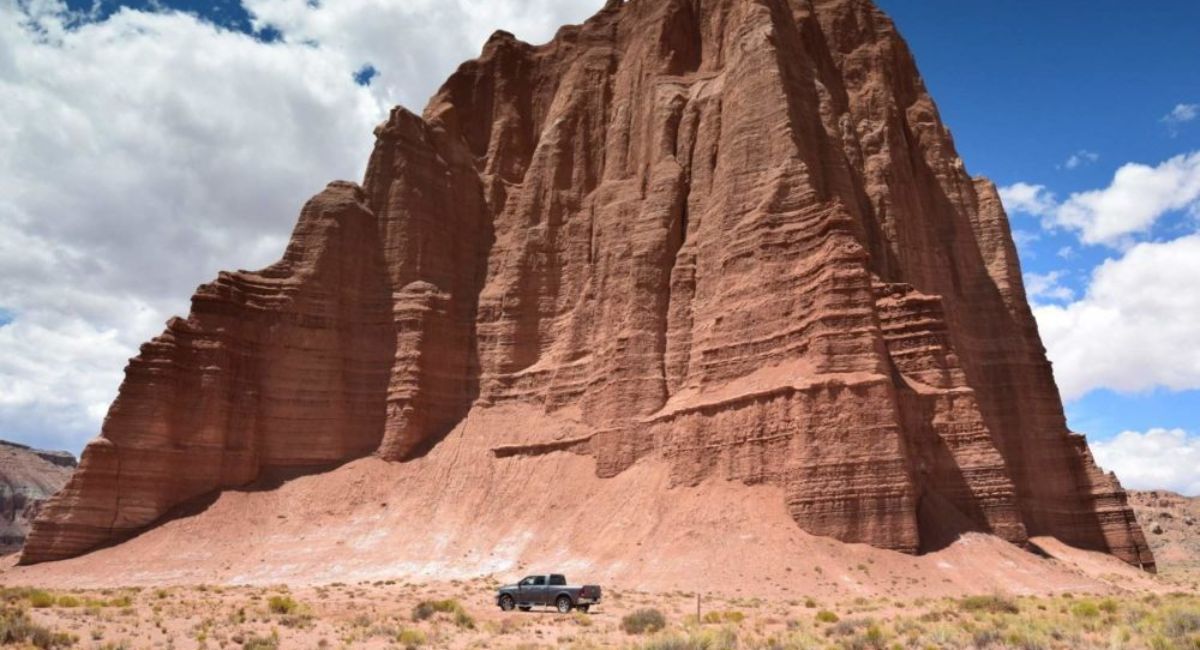
The Temple of the Sun and the Temple of the Moon are located in the Northeast part of Capitol Reef National Park. To get there, you will want a vehicle with high clearance. High-clearance vehicles can usually make it even without 4WD, so most trucks should get the job done. Drive straight through the park on Highway 24 and look for Cathedral Road (also called Caineville Wash Road), just west of Caineville. Check weather conditions first, as you don't want to go out there after a recent rain. You are driving over desert washes and it can become one giant mud pit when it is wet. There's no water out there, and cell service is poor to nonexistent, so carry plenty of water, food, and fuel. We've heard from renters who turned back at the first muddy wash, and that was the right call.
Like every drive in Capitol Reef, the scenery is spectacular. White silty formations stretch out across the landscape. Stone and mud form a mosaic of strange shapes all around you. After miles of this alien landscape, you end up at Cathedral Valley, a vast and flat area of desert punctuated by lone towers of stone. The Temple of the Sun and Temple of the Moon are the best known of these. You can drive right up to both. You should also take a short detour and visit Glass Mountain. It's actually a large mound of selenite crystals, a form of gypsum rather than glass. If you ever wanted to see a hill made of crystal, here is your chance. Look, but leave it be: collecting of any kind is prohibited in national parks.
Since this is backcountry, you can go walking in nearly any direction for as long as you like. Chances are, you won't see another soul the entire time you are out there. Just keep an eye out for snakes as you are a long way from any kind of emergency assistance.
Day Six: Upper Cathedral Valley
For your last full day in the park, you should consider a trip to upper Cathedral Valley. This is another part of the backcountry on the eastern side of the Reef. Much like yesterday's trek, you need dry weather to make this journey. This time you take 24 up to Hartnet Road, about 11.7 miles east of the visitor center, and then turn into the backcountry. Right away you'll ford the Fremont River. There's no bridge, the crossing is normally a foot deep or less, and you shouldn't try it during floods or high water. You will travel through the North Blue Flats where the sedimentary stone takes on a blue-grey hue. Halfway along the road, turn off to check out the Lower South Desert Overlook. It's a great spot for scenic photography.
Near the end of the road are more scenic overlooks you can drive up to and take in the stunning views. The valley is dotted with more stone monoliths, the result of stone formations that resisted the centuries of erosion that formed the valley here. If you are feeling adventurous, you can camp out under the stars at the Cathedral Valley Campground. It has six free, first-come, first-served sites with a pit toilet but no water, at about 7,000 feet. The desert at night is a unique and magical thing that everyone should experience at least once. Just keep in mind it can get quite cool in the night even on days that are warm. Renters we talk to who spend a night out there often call it the highlight of their week.
Day Seven: Last Stops
For your last day, take the now familiar road back towards Fruita. Stock up on some pie and treats for the folks back home. If you're visiting between late November and mid-March, the Gifford House will be closed, so pick up your treats in Torrey instead. Then make your way back. No matter the direction you take, you are sure to be rewarded with more epic scenery you will never forget.
Where should you camp with an RV near Capitol Reef?
You have two good choices for a week-long base. Inside the park, Fruita Campground has 71 sites for $25 a night (half price with a Senior or Access pass), and reservations open six months ahead. There are no water, sewer, or electric hookups at the sites, but a dump station and water fill sit between Loops A and B. They're free with a campsite reservation and $5 otherwise. Stays are limited to 14 nights from March through November. Site lengths vary, so check the site-by-site lengths on the campground map against your rig before you book. From March 1 to December 1, generators are allowed only in the C loop, and only during posted generator hours.
If you want full hookups in Torrey, base yourself at Wonderland RV Park and drive in each morning. Coming in self-contained? Our guide to dry camping for beginners covers water, power, and tank planning, and our Utah RV campground guide has more options around the state. Renters we talk to who roll into Fruita with full fresh water and empty tanks have the easiest week.
Which Capitol Reef roads can your RV handle?
Highway 24 through the park is paved and fine for any rig. Beyond that, here's how the park's road rules shake out:
- Scenic Drive and its dirt spurs: RVs up to 23 feet, weather permitting.
- Burr Trail switchbacks: not suitable for RVs or vehicles towing trailers.
- Notom-Bullfrog Road: about 17 miles of dirt with bentonite clay that's treacherous when wet. Check with the visitor center first.
- Hartnet and Cathedral roads: high clearance needed, plus a Fremont River ford on Hartnet Road. Plan a full day; the loop is 57.6 miles and takes about six to eight hours.
For the latest, call the park's road conditions line at 435-425-3791 and follow the prompts for road conditions. The phone line is updated more often than the website.
Can you add Bryce Canyon to a Capitol Reef week?
Yes, and Scenic Byway 12 is a beautiful way to do it. The drive from Bryce Canyon to Capitol Reef takes about three hours on SR-12. The road tops out at 9,600 feet on Boulder Mountain and can be hazardous in winter, so check conditions before you go. If you'd like to see all five of Utah's national parks, our guide to a Utah Mighty Five road trip shows how Capitol Reef fits in.
Ready for your trip to the unforgettable Capitol Reef? Get started on finding a great RV to rent on Outdoorsy!
About this guide
Originally written by Outdoorsy author Sigfried Trent. Updated in November 2026 by the Outdoorsy Editorial team. The facts in this guide were checked against official and primary sources, which are linked throughout. Dates, fees, and road conditions change, so check with the park before you go.