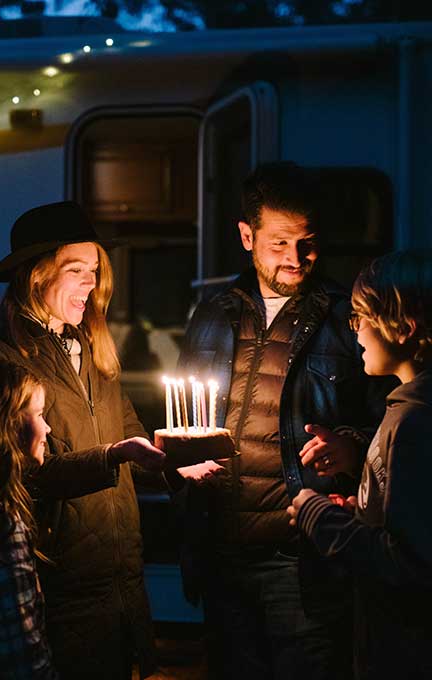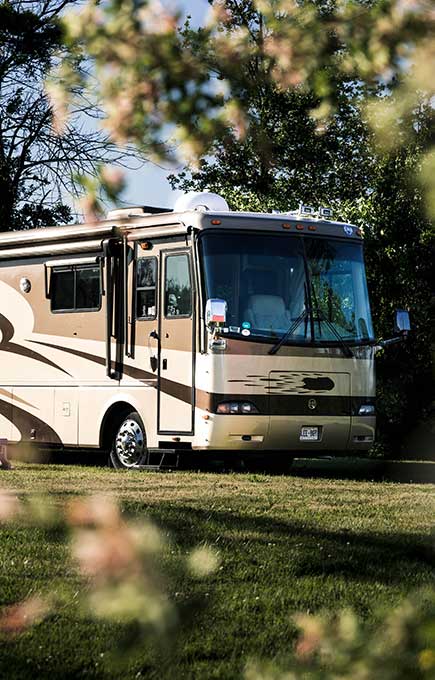

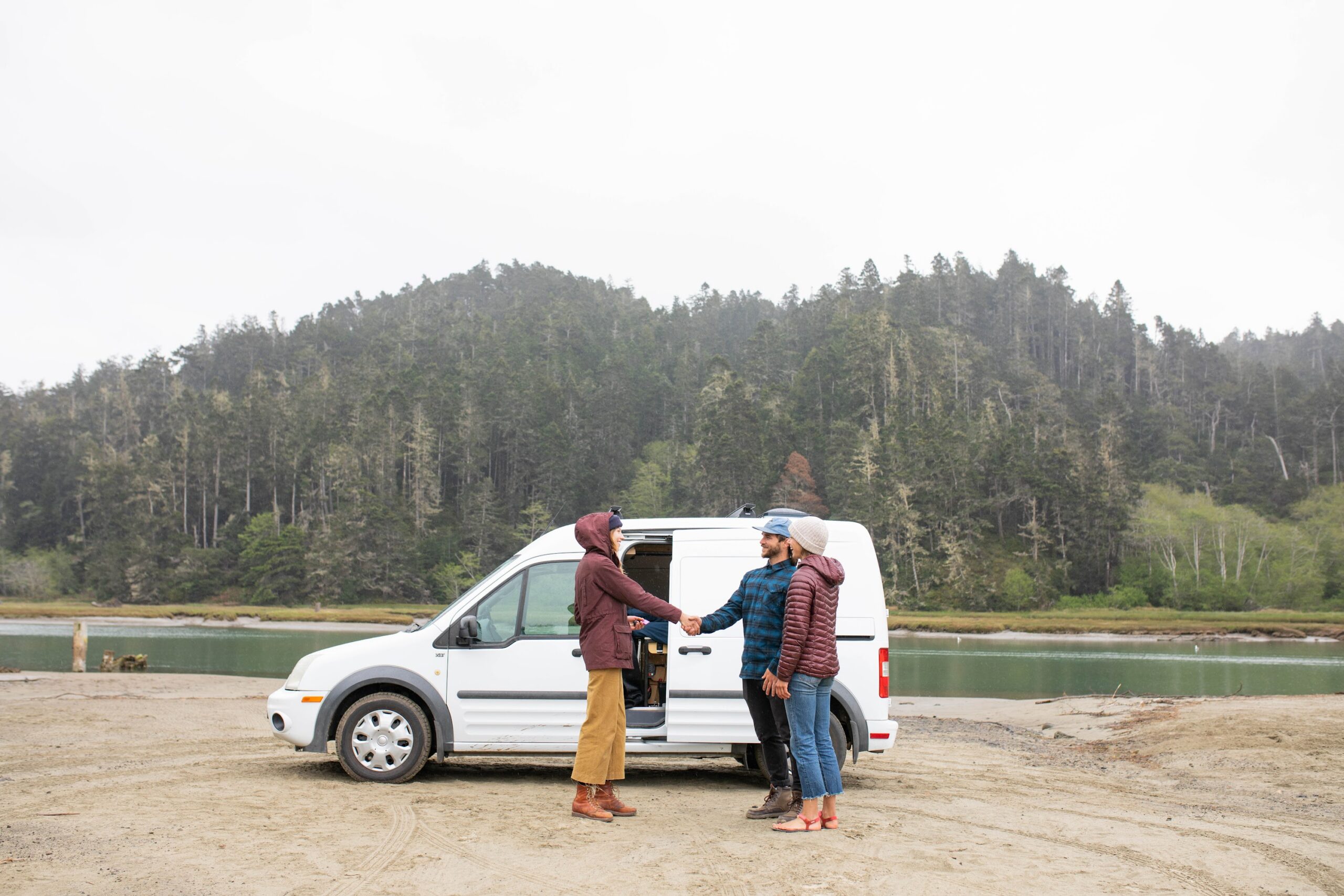
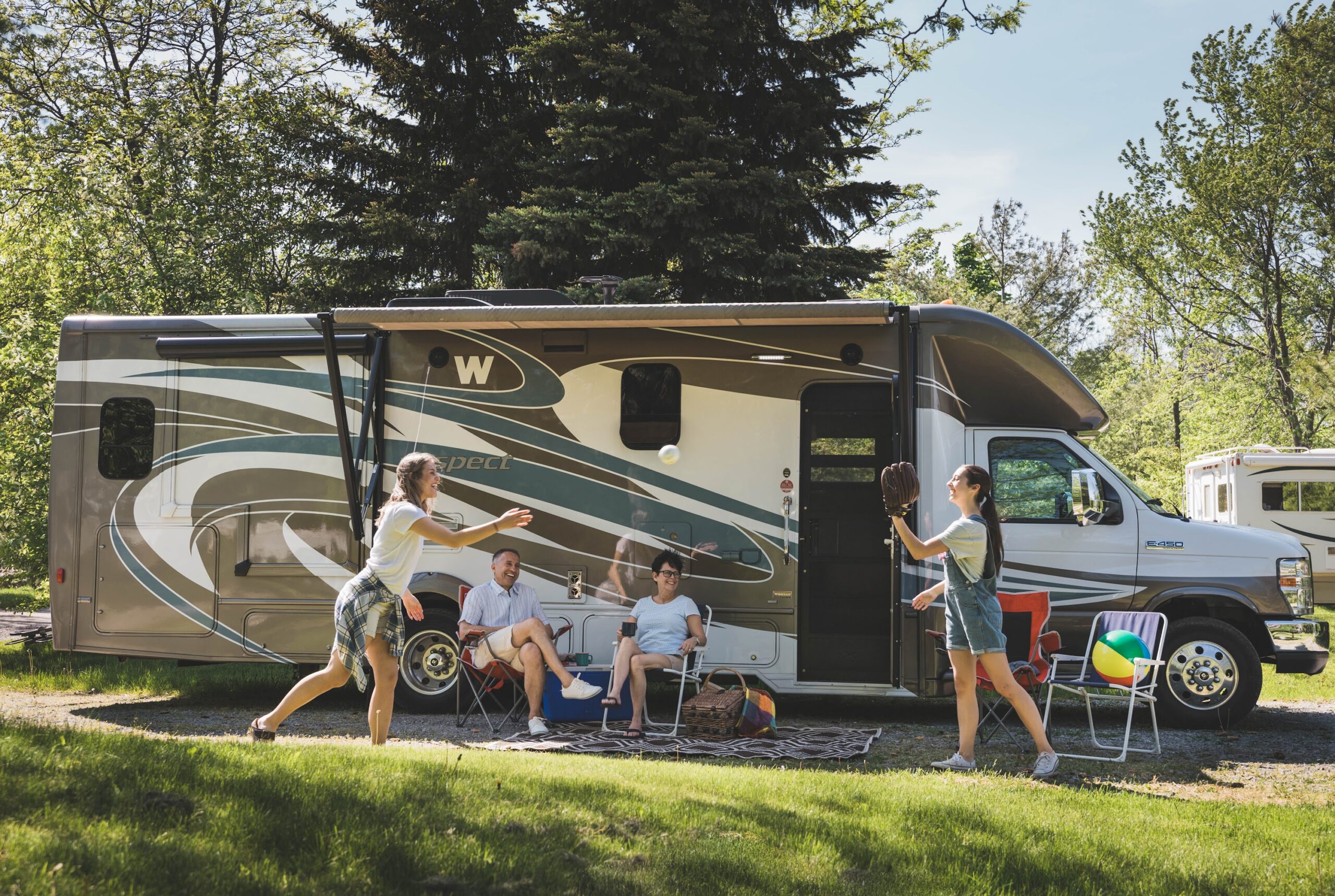
Search "music festival RV camping" and you'll get articles that treat every festival like it works the same way. It doesn't.
Some of the biggest festivals in the country — Austin City Limits, Shaky Knees — don't allow RV camping at all. Others, like Bonnaroo and Bourbon & Beyond, have real RV infrastructure with rules specific enough to trip up a first-timer: generator hours that vary by festival, no re-entry once you're parked, and hookups that exist at some sites and not others. This guide sorts the festivals that actually work for an RV from the ones that don't, and walks through what changes once you get there.
The short version:
- Not every major festival allows RV camping. Austin City Limits and Shaky Knees ban it outright — both are downtown park venues with no camping infrastructure at all. Coachella does too, which we've covered in detail separately.
- Bonnaroo, Bourbon & Beyond, Stagecoach, Electric Forest, and Country Thunder all have real on-site RV camping — but hookup availability, generator hours, and re-entry rules differ festival to festival.
- Generator hours and re-entry rules are what actually trip people up, not the camping itself. Bourbon & Beyond runs generators 8 a.m.–3 a.m. and allows zero re-entry for camping vehicles once parked; other festivals set different limits.
- Hookups are inconsistent even within a single festival. Most RV camping is dry (no water/electric/sewage) unless you specifically buy a powered or premium tier.
- Don't trust a flat dollar figure for festival RV camping — pricing swings by festival, tier, and season. Confirm on the festival's own camping page before you book, not from any article, including this one.
Which major music festivals actually allow RV camping?
Here's the honest breakdown, festival by festival, starting with the ones that say yes.
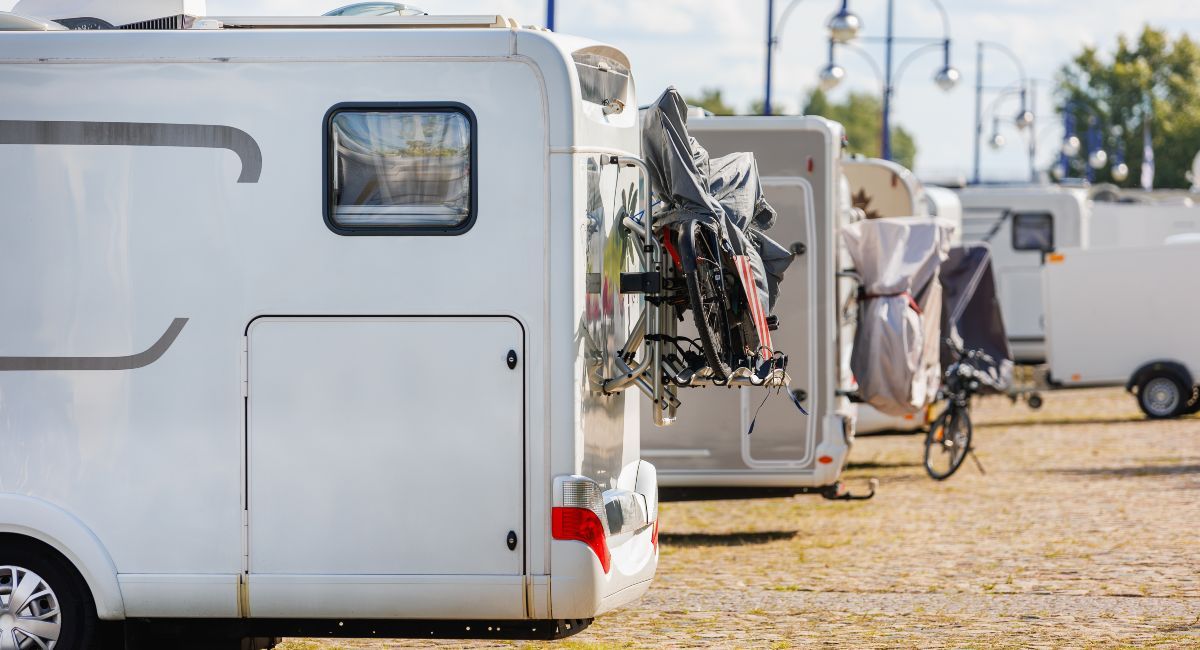
- Bonnaroo (Manchester, TN), June. Yes. Every RV entering the grounds needs its own RV pass, sites run about 20' x 50', and new for 2026, every RV pass comes with a powered hookup option (30 or 50 amp) — a real upgrade from prior years. There's no on-site dumping, but a mobile water refill/pump service runs through the festival's site-services vendor for a flat per-visit fee. Spots are assigned by arrival order, so earlier arrivals land closer to the main festival grounds.
- Bourbon & Beyond (Louisville, KY), September. Yes, and the most detailed official rules of any festival in this list. Camping passes include five nights, a shower building, and re-entry to the festival grounds during event hours — but no re-entry for the RV itself once it's parked (a separate Overnight Camping Vehicle Pass covers a second vehicle if you need to leave and come back with wheels). Sites run about 20' x 45', sleep up to six, and a Premium tier adds 30/50-amp power.
- Stagecoach (Indio, CA), April. Yes — run by the same promoter and at the same venue as Coachella, but with a very different RV policy: Coachella bans RVs onsite, Stagecoach allows them. RV site passes and festival admission wristbands are purchased separately. Like Bourbon & Beyond, there's no leaving and re-entering with your camping vehicle once you're checked in.
- Electric Forest (Rothbury, MI), June. Yes, across General Admission, Good Life Village (VIP), and Back 40 camping zones. Hookups are limited — a smaller number of premium sites offer power or full hookups, and most RV campers here should plan to dry camp.
- Country Thunder Arizona (Florence, AZ), April, and Country Thunder Wisconsin (Twin Lakes, WI), July. Yes, with tiered RV camping at both — a primitive/dry tier and a Premier or Crown tier with 50-amp power, water fill, and septic service.
- Austin City Limits (Austin, TX), October. No. ACL is held in Zilker Park, a downtown Austin city park with no overnight camping infrastructure of any kind — the festival's own policy states plainly that "RV camping" is not permitted on festival grounds. RVers go the off-site route: nearby parks and KOAs with a daily commute in.
- Shaky Knees (Atlanta, GA), September. No. Same story as ACL — an urban park venue (Piedmont Park) with no on-site camping. Nearby RV parks 20–40 minutes outside downtown are the workaround.
- Coachella (Indio, CA), April. No — Coachella's own site explicitly bans RVs, motorhomes, and any vehicle with running water or a toilet from the festival grounds. Since it's the single most-searched "can I RV camp here" question in this whole category, we built a dedicated guide to Coachella, covering the offsite-park and shuttle workaround in full.
What rules actually trip up first-time festival RV campers?
The camping part is rarely the surprise — it's the fine print. In our experience, renters who've done a national-park boondocking trip assume festival RV camping works the same way, and it doesn't.
- Generator hours vary by festival, and they're enforced. Bourbon & Beyond allows generators from 8 a.m. to 3 a.m., and only permits factory-installed RV generators (or portable units 4kW or smaller if not factory-installed) — no aftermarket setups. Other festivals set different windows. Check the specific festival's rules; don't assume one festival's hours apply to another.
- "No re-entry" for RVs is common, and it's not the same as "no re-entry for people." At Bourbon & Beyond and Stagecoach, once your RV is parked, it's parked for the duration — you can walk in and out on foot, but the vehicle itself isn't leaving and coming back without a separate pass (where offered). Plan grocery runs and any off-site errands before you park.
- What counts as "an RV" is broader than you'd think. Bonnaroo defines an RV as any vehicle 20 feet or longer, any bus, anything wider than a standard 15-passenger van, or anything towing a camper or fifth wheel — box trucks and cargo trailers are banned from the campgrounds entirely, not just restricted.
- A second vehicle usually needs its own pass. Most festivals with RV camping (Bonnaroo, Bourbon & Beyond) require a Companion Pass or Overnight Vehicle Pass for any car parked alongside your RV, and it typically has to arrive at the same time as the RV to be valid.
- Hookups are the exception, not the rule. Even at festivals that offer power, it's usually a specific premium tier, not the default RV site. Renters we talk to who assume every RV spot has power are the ones who end up dry-camping unexpectedly on night one — pack accordingly (full water tank, charged house battery, a plan for gray/black tanks) even if you're hoping for hookups.
- RV delivery to the campground generally isn't allowed. Bonnaroo and Bourbon & Beyond both explicitly block RV drop-off/delivery service — everyone entering the campground needs a ticket and wristband, including whoever drives the rig in.
What does festival RV camping actually cost?
Here's the honest answer: it varies enormously, and most of what's published outside of official festival pages is a resale-marketplace estimate, not a confirmed price. We'd rather tell you that plainly than hand you a number that's wrong by the time you book.
What we can say with confidence, based on the festivals we researched directly: dry (no-hookup) RV camping tends to run cheaper than powered/premium RV sites, powered sites often cost several hundred dollars more per festival, and RV camping is consistently pricier than tent or car camping at every festival that publishes both tiers — it's a premium experience, not a budget one. Beyond that directional shape, treat any specific dollar figure — including ones you'll find elsewhere — as a starting point to verify on the festival's own camping-passes page, not a quote.
A few cost-shaping factors worth knowing before you budget:
- Tier matters more than festival. The gap between a dry RV site and a powered/premium RV site at the same festival is often bigger than the gap between two different festivals' dry sites.
- Festival admission is (almost) always separate from the camping pass. Don't budget camping cost as your whole ticket price — it's an add-on, not a bundle, at every festival in this guide.
- Extras add up. Water pump-out/fill services, a Companion Vehicle Pass, and an Overnight Camping Vehicle Pass are all typically priced separately from the base RV site.
- Renting vs. bringing your own RV changes the math. If you don't own a rig, comparing Class B and Class C rental rates against a festival's RV camping tier is the real budget conversation — sometimes a smaller, cheaper-to-rent rig with a dry site beats a bigger rig chasing a powered spot.
How do you pick the right festival and rig for RV camping?
Start with whether the festival allows RVs at all — that's the filter most people skip. From there, match your rig to the festival's actual rules, not to what you'd bring on a national park trip. We've watched first-timers book a rig sized for comfort, then struggle to maneuver it into a tightly staked-out festival lot — smaller is almost always easier here than it is on a highway road trip.
- Going solo or as a couple? A Class B campervan is the easiest fit for festival lots — smaller footprint, easier to maneuver into an assigned space, and plenty of room for a few days of festival living.
- Bringing a group? Check the festival's per-site sleep limit before you book — Bourbon & Beyond caps RV sites at six people, for example — and look at group RV rental options if you need more than one rig's worth of space.
- Want power? Confirm the specific hookup tier exists at your festival before you commit to a rig that needs 50-amp service — dry camping is still the default across most of this list.
- New to festival camping generally? A smaller RV rental is more forgiving on tight festival lot spacing than a large Class A, and easier to park precisely where staff direct you on arrival.
- Heading to Bonnaroo? Tennessee RV rentals put you close to Manchester, and our Nashville RV campgrounds guide is useful if you're routing through Nashville on the way.
- Heading to Stagecoach or Coachella? Browse California RV rentals for pickup options near the Coachella Valley.
For the wider festival landscape beyond RV-specific camping, Outdoorsy's events guide rounds up more festivals and trip ideas.
Key takeaways
- Check whether your festival allows RV camping before you plan around it. Austin City Limits, Shaky Knees, and Coachella all ban it; Bonnaroo, Bourbon & Beyond, Stagecoach, Electric Forest, and Country Thunder all allow it.
- Generator hours and re-entry rules vary by festival and are strictly enforced. Confirm both before you book, not after you arrive.
- Hookups are usually a premium add-on, not the default. Plan to dry camp unless you've specifically booked a powered tier.
- A second vehicle almost always needs its own pass, and it typically has to arrive with the RV to be valid.
- Don't budget off a number you found online — including this article. Confirm current pricing on the festival's own camping page.
About this guide
This guide was prepared by the Outdoorsy editorial team. Bonnaroo's RV pass rules, site dimensions, and the new-for-2026 powered RV option were verified directly against the Bonnaroo RV Passes FAQ on July 3, 2026. Bourbon & Beyond's camping rules, generator hours, site dimensions, and re-entry policy were verified directly against the Bourbon & Beyond Camping Info page on July 3, 2026. Austin City Limits' no-camping policy is per the ACL Festival camping FAQ. Coachella's onsite RV ban is per Coachella's own camping page. Stagecoach, Electric Forest, Shaky Knees, and Country Thunder details are drawn from festival websites and secondary research and should be reconfirmed against each festival's current-year camping page before publish, since festival camping rules and hookup availability change year to year — this is explicitly not a set-it-and-forget-it category.