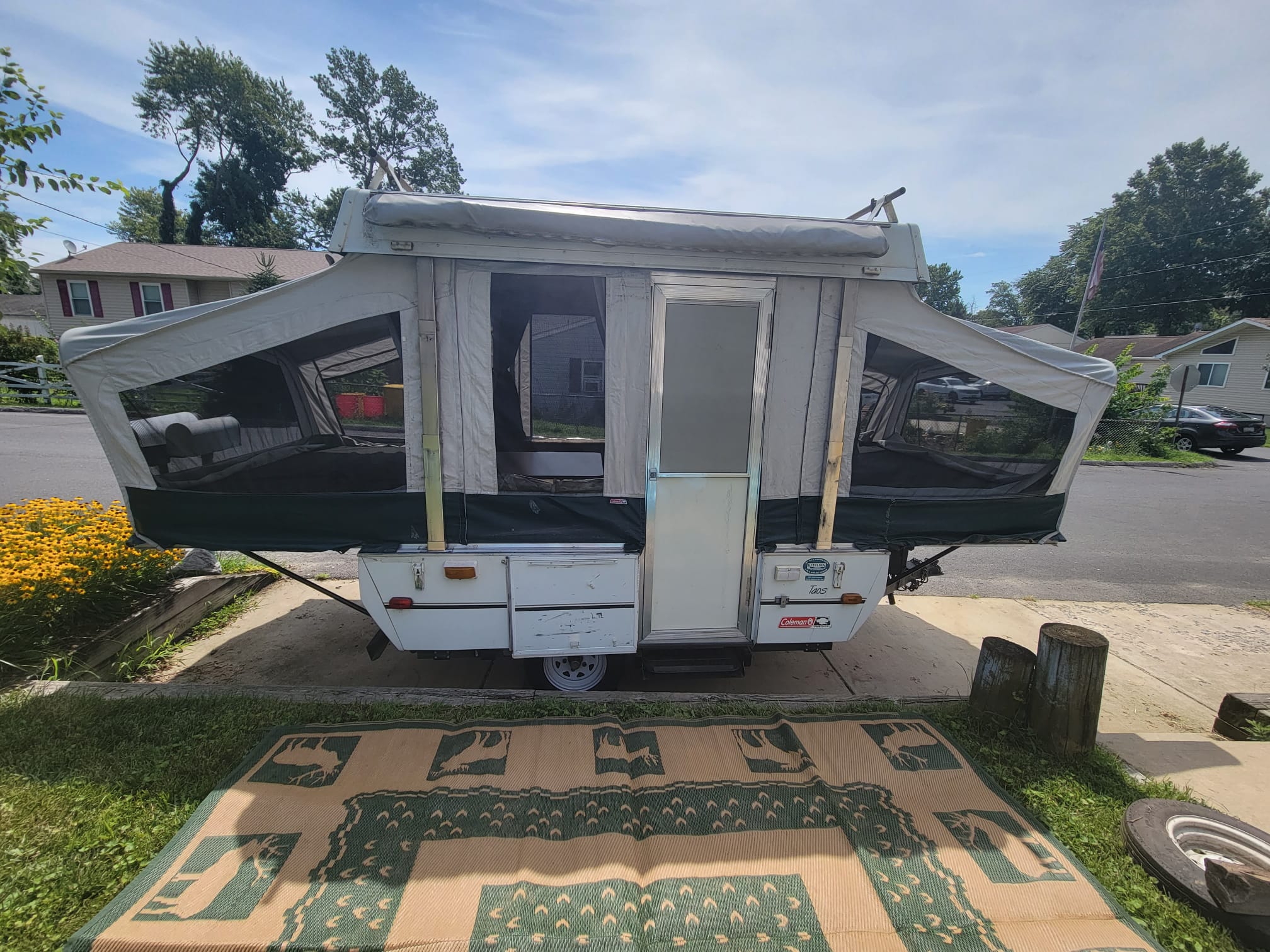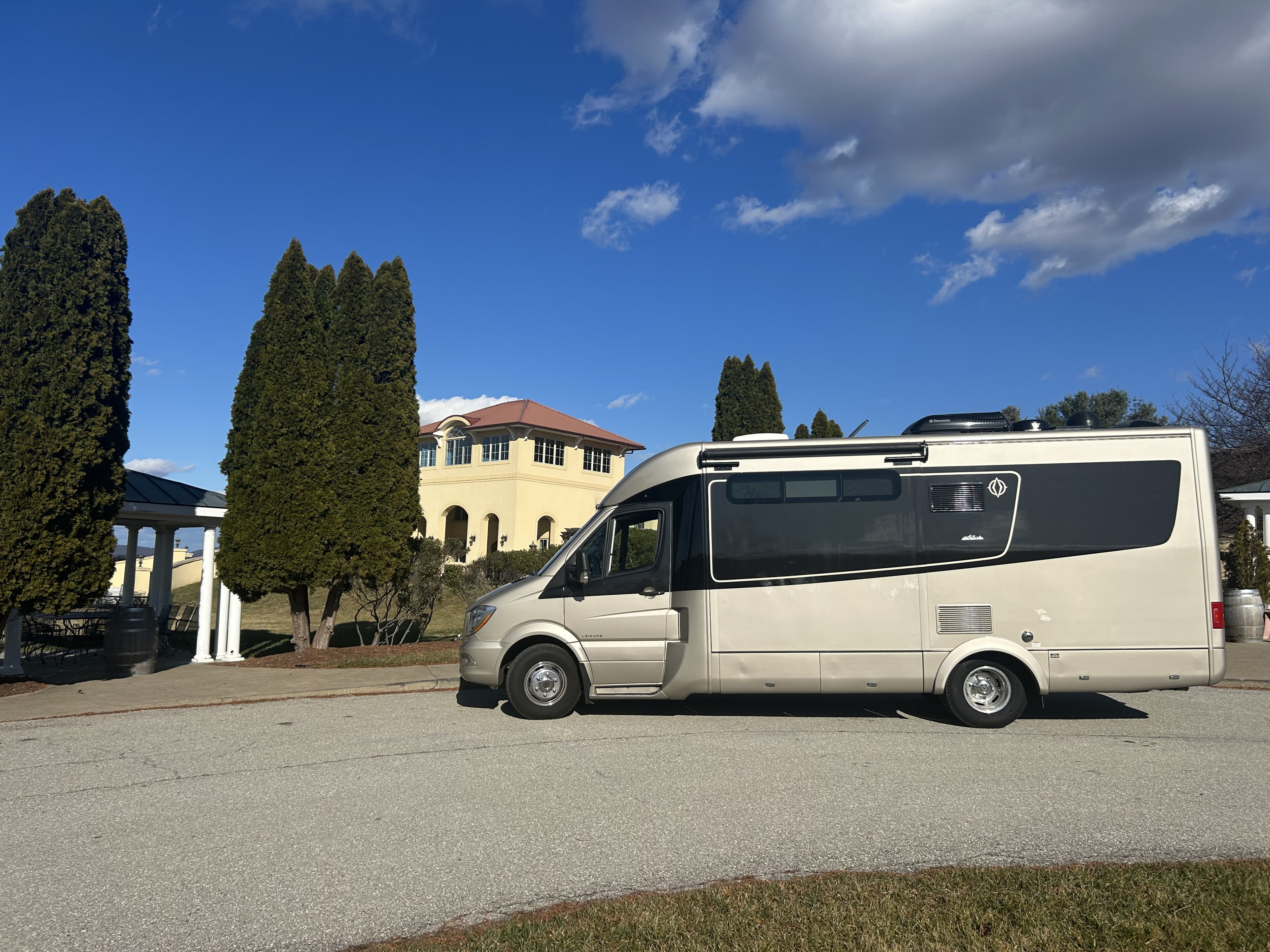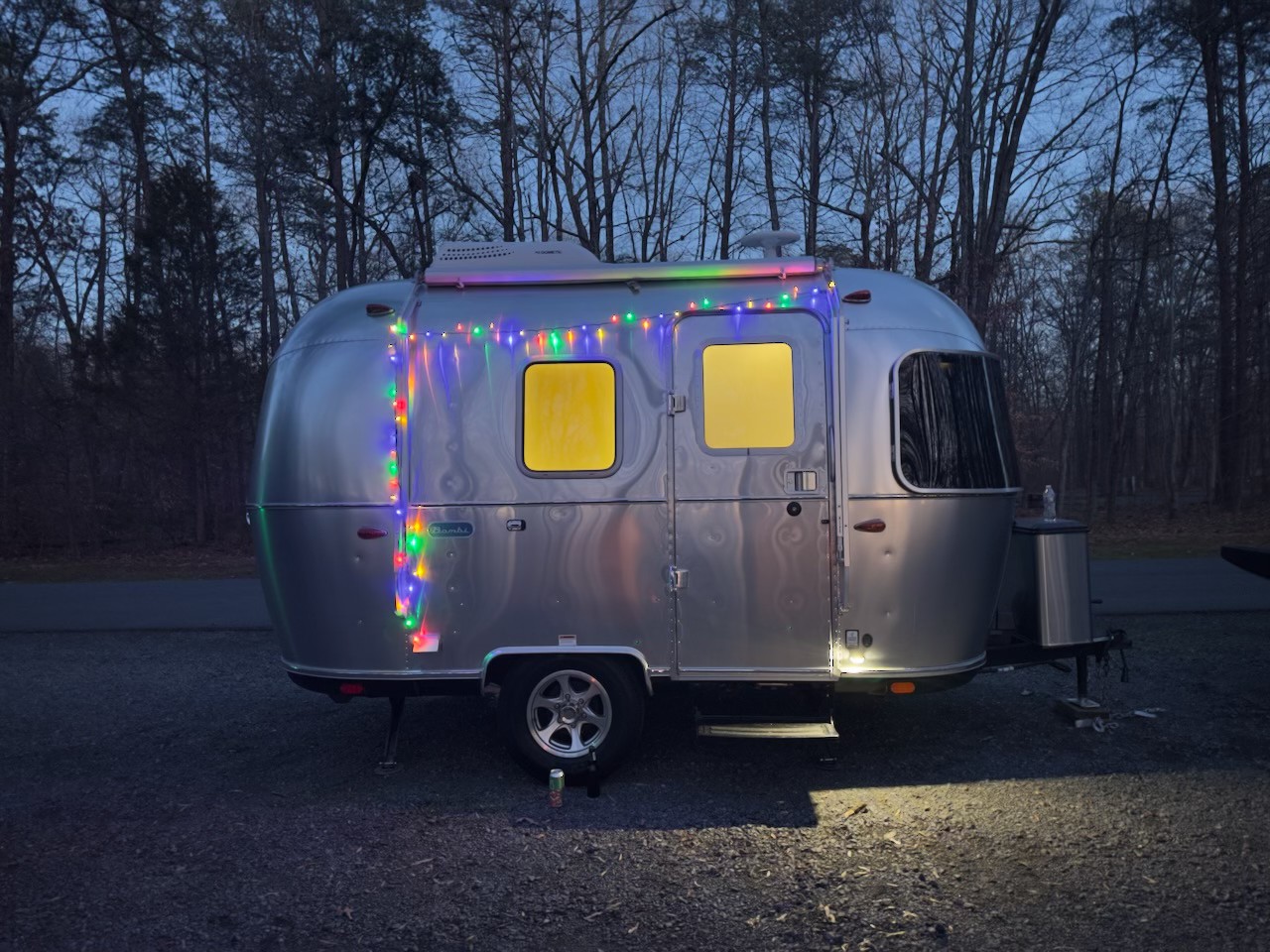


When buying or selling vehicles, Kelley Blue Book (KBB) has long been a trusted source for determining the value of cars, trucks, and motorcycles. This leaves many people wondering if Kelley Blue Book RV valuations are an option as well. After all, if we want to buy or sell a motorhome or camper trailer, we need to know how much it’s worth, right?
You’ve come to the right place! In this article, we will explore the extent of KBB’s coverage of RVs. We will also shed light on alternative resources that can assist in determining the value of these unique mobile homes-on-wheels so you can buy and sell with confidence.
So, Does Kelly Blue Book Offer RV Valuation?
Kelley Blue Book (KBB) doesn’t provide valuations for RVs, motorhomes, or travel trailers—it focuses exclusively on cars, trucks, and motorcycles. For accurate RV pricing, turn to NADA Guides, the gold standard for RV values since 1933, or tools like RV Trader’s valuation calculator, dealership appraisals, and online forums.
Whether you’re thinking about selling your Class A motorhome, trading in your travel trailer, or wondering if you should list your rig on Outdoorsy instead, knowing what your RV is actually worth takes the guesswork out of the equation. Let’s dig into how to figure it out.
RVs For Rent Near You
Why doesn’t Kelley Blue Book value RVs?
Short answer? RVs are just too different from regular vehicles for KBB’s system to handle.
Think about it—KBB has been valuing cars since 1926, and they’re really good at it. But RVs? They’re a whole different animal. Your average sedan doesn’t have slideouts, full kitchens, or depend on whether someone upgraded to solar panels. RVs depreciate differently, and things like floor plans and appliance quality matter way more than they do in your Honda Civic.
Brands matter too. Is it a Winnebago, an Airstream, or something else? That changes everything. The RV Industry Association tracks all this stuff, and it’s a lot more complex than what KBB’s system was built for.
So KBB stuck with what they know best, and the RV world found its own solutions. Actually, better solutions—tools built specifically for how RVs actually work.
Here’s something to think about before you sell: what if your RV could pay for itself? A lot of folks are renting out their RVs on Outdoorsy and making enough to cover payments, insurance, and storage—sometimes even turning a profit. Worth considering if you’re on the fence. And if you want to understand how RVs lose (or hold) their value, we’ve got you covered there too.
What should you use instead of Kelley Blue Book for RV values?
NADA Guides is your best bet—and it’s been around since 1933, so they’ve seen everything.
NADA Guides (the National Automobile Dealers Association, now hosted by J.D. Power) understands RVs inside and out. They track wholesale values, retail prices, and loan values—basically everything you need, whether you’re selling to a neighbor, trading at a dealer, or trying to get financing. They update their numbers quarterly, too, so you’re not working with stale data.
When you plug in your RV’s info—year, make, model, length, condition—NADA gives you three values: low retail (what you might take for a quick sale), average retail (fair market price), and high retail (if your rig’s in stellar shape). It’s pretty straightforward once you get in there.
Understanding NADA RV Values: Key Terms
Manufacturer’s Suggested Retail Price (MSRP): Often referred to as the sticker price, this is the retail price suggested by the RV manufacturer for new units at dealerships. While it acts as a reference point, the final sale price can vary depending on market factors and negotiation.
Low Retail Price (Dealer Trade): This represents the typical amount a dealer might pay for a used RV in below-average condition or with significant wear. It’s also the upper limit of what most dealers are willing to offer for a trade-in.
Average Retail Price (Retail Value): This value reflects the expected cost of purchasing a used RV from a dealership. It serves as a benchmark for negotiations and can differ based on the RV’s condition and the dealer’s pricing methods within a given area.
Private Party Value: A term associated with Kelley Blue Book, this value indicates the starting price private sellers can use to negotiate the sale of a used vehicle. While not part of NADA’s metrics, it’s a helpful comparison point for private transactions.
Wholesale Value: The amount dealers typically receive when selling an RV at auction or the cash offer provided when they buy an RV outright. Although NADA’s wholesale values aren’t publicly shared, they can often be estimated by subtracting 10% to 20% from the low retail price.
Depreciation: RVs lose value over time, much like cars and trucks. In the first year, depreciation averages between 10% and 20%, with an overall decrease of 36% to 38% after five years. NADA’s valuation methods take into account the same factors that influence these depreciation rates.
Blue Book Value: A widely recognized term for determining the market value of vehicles, including RVs. Although it originated with Kelley Blue Book, the term “Blue Book value” has become a general reference for assessing vehicle worth.
But don’t stop at NADA. Here are the other tools worth checking:
RVTrader
The NADA Guides website is probably the fastest and easiest way to figure out the value of your RV. That said, it’s best to compare what NADA Guides says with what other resources seem to think. This is where RV Trader comes into play.
RV Trader is an online marketplace primarily focused on buying and selling RVs. They offer a valuable tool called “RV Valuation” that helps users estimate their RV’s current market value based on various factors.
While not as comprehensive as the NADA Guides, RV Trader’s valuation tool is handy for comparison purposes and will definitely help you get a better feel for what an RV might be worth.
Local RV Dealerships
Another great way to make sure you’re buying or selling at a reasonable price point? Check in with local RV dealerships to compare the price of your RV with current real-world RV pricing.
Check out this search to find RV dealerships in every state.
You see, dealerships have insights into the current market trends and can provide accurate valuations based on their recent selling experience as well as their expertise. While this approach may involve some legwork, it can be particularly useful when considering trade-ins or selling your RV to a dealer. Just be sure to get a few different opinions before agreeing to any offers!

Online Forums and Communities
Lastly, engaging with online RV forums and Reddit communities can be an excellent way to gather information on RV values. There are several active online communities where RV enthusiasts discuss various topics, including pricing and valuations. By checking in with these forums, you will gain valuable insight from experienced RV owners as well as many industry professionals who spend the majority of their time immersed in the world of RVing.
That said, there are things you want to keep in mind when seeking advice from forums. First, not everyone in every forum knows what they’re talking about. Instead, you’ll want to use this tool to get a general feel for what your RV might be worth, using the information provided by the group as a whole rather than any one individual. Second, old threads can provide outdated information, so you will want to be sure to start your own new thread.
What actually affects your RV’s resale value?
Let’s be real—new RVs lose value fast. Like, the second you drive it off the lot fast. Most drop 20-25% immediately, then another 10-15% each year for the first five years (RV Industry Association tracks all this). The good news? After year five, things slow way down. A well-maintained 10-year-old Class A might still be worth 35-40% of what it cost new.
How Much Do RVs Depreciate?
Here’s a helpful table to see how RV value can decline over time:
| Year of Ownership | Depreciation Rate (%) | Cumulative Depreciation (%) |
| 1 | 20% | 20% |
| 2 | +10% | 30% |
| 3 | +5% | 35% |
| 4 | +5% | 40% |
| 5 | +5% | 45% |
Here’s what actually moves the needle on your RV’s value:
Age and mileage matter, but not like you’d think. RVs aren’t cars—lots of them sit parked for months. A 2018 with 15,000 miles might beat a 2020 with 40,000 miles, but here’s the twist: too few miles can be a red flag. If a 2016 has 5,000 miles, buyers wonder what’s wrong with it. The sweet spot is usually 3,000-5,000 miles a year, which shows regular use and proper maintenance.
Your maintenance records are worth money. Keep every receipt. Oil changes, roof seals, appliance service, new tires—document it all. Buyers will pay more when they see you actually took care of the thing. Water damage, delamination, or worn-out upholstery? Those kill deals fast. But if you’ve upgraded to a residential fridge or better HVAC? That’s a value you can sell.
Brand reputation is huge. Airstream, Winnebago, Newmar—these names hold value. A 10-year-old Airstream travel trailer might still be worth 60% of its original price, while some budget brands drop to 30-35%. Thor owns a bunch of different manufacturers with wildly different reputations, so do your homework on the specific model.
Features people actually want: Solar panels, lithium batteries, upgraded suspension, outdoor kitchens—these add real value. Full-body paint beats decals. Modern interiors sell faster than dated ones. Slideouts are nice, but only if they’re in good condition—otherwise, they’re just maintenance concerns.
Timing matters more than you’d think. List in spring and you’ll get peak prices. Try to sell in December? You’re leaving 10-15% on the table. And location plays a role too—RVs sell faster and for more in places like Phoenix, Denver, Austin, and San Diego, where people can camp year-round.
Want to know more about keeping your RV’s value up? Check out our guides on maintaining your RV’s value and preparing your RV for rental or sale.
How do you figure out what your RV’s actually worth?
Here’s the thing: your Class C that cost $95,000 new in 2019? It’s probably worth $55,000-$65,000 today. That might sting a bit, but it’s reality—and knowing the real number means you can price smart and actually sell the thing.
Start with NADA. Get all three values—low, average, and high retail. Then cross-check with RV Trader’s calculator. Write these numbers down. They’re your starting point for negotiations.
Now go browse RV Trader, Facebook Marketplace, and RVT.com. Find rigs like yours—same year, make, model, similar condition. Look at the asking prices, but here’s the reality check: people usually take 8-12% less than they’re asking. So if you see $65,000 listings, actual sale prices are probably closer to $58,000-$60,000.
Be honest with yourself about the condition. That roof leak you “fixed” last year? Future buyers will spot it. Water damage, worn tires, outdated appliances—these justify pricing below NADA’s numbers. On the flip side, if you just installed a new awning or upgraded your batteries, that supports higher pricing.
Location matters too. RVs in Florida, Texas, and California sell faster and often get 5-10% more because people camp year-round. Northern markets? More seasonal ups and downs.
Get some professional input. Visit 2-3 dealers for trade-in quotes—they’ll come in 20-30% below retail (they need room to make money when they resell), but it’s free information. If you’ve got a higher-end rig or you’re worried about hidden issues, spend $300-$500 on an independent inspector. Better to know now than during a buyer’s inspection.
Here’s something most people don’t consider: before you commit to selling, what if you listed your RV on Outdoorsy for a season? You could make $3,000-$8,000+ while you decide. A lot of owners realize rental income covers most of their ownership costs, and suddenly, selling doesn’t make as much sense. Check out our RV value guide for more detailed pricing strategies.
Should you trade in at a dealer or sell it yourself?
This is the eternal question, and honestly? There’s no perfect answer—it depends on what you value more: money or convenience.
If you sell privately, you’ll make 20-30% more. A fifth wheel worth $50,000 retail might only get $35,000-$38,000 as a trade-in, but you could sell it for $47,000-$48,000 to someone on Facebook Marketplace or RV Trader. You control the story, show off your upgrades, talk directly with buyers. It’s more money in your pocket.
But here’s what private sales actually involve: 30-90 days to find the right buyer, dealing with tire-kickers and lowball offers, scheduling showings, answering the same questions over and over, managing test drives, handling paperwork and title transfers, worrying about payment fraud. It’s basically a part-time job. And you’ve got liability until those papers are signed and the buyer drives away. Our guide on buying and selling RVs peer-to-peer covers the full process if you go this route.
Dealer trade-ins are the opposite—instant and effortless. Show up, they make an offer, you drive away in your new rig. They handle all the paperwork, title work, loan payoffs. If you’re trading up, you might even save on sales tax in some states by applying the trade-in value toward your new purchase. Zero stress, zero liability after you sign.
The catch? You’re leaving 20-30% on the table. Dealers need room to make money when they resell your rig, so their offers reflect that. And if you fall in love with your new RV before negotiating the trade-in value, you’ve lost your leverage.
Here’s what smart sellers do: get trade-in quotes from 2-3 dealers (it’s free), then try the private market for 30-45 days. If you’re not getting offers within 10-15% of your target, the trade-in starts looking pretty good. Your time has value too.
Or here’s another angle most people miss: rent your RV on Outdoorsy while you’re testing the sales market. Earn $100-$300+ per night during those 60-90 days, then decide if selling actually makes sense. A lot of owners find that their Class B rentals make more annually than the RV depreciates. Check out the pros and cons of renting to see if it’s right for you.
What mistakes tank your RV’s resale value?
Let’s talk about the stuff that’ll cost you thousands without you even realizing it.
Not keeping maintenance records. Buyers don’t care that you “changed the oil regularly”—they want receipts. Create a binder with every service invoice, warranty paper, owner’s manual, and repair receipt you can find. This one thing can add $2,000-$5,000 to your sale price because it builds trust. If you’ve been renting out your RV, keeping these records is just as important—here’s our guide on preparing your RV for rental or sale.
Hiding problems. That generator that acts up sometimes? Disclose it upfront. Buyers will find it during their inspection anyway, and when they do, they’ll either walk away or demand a massive price cut. Honesty doesn’t cost you money—surprises do.
Pricing with your heart instead of the market. “But I paid $80,000!” Yeah, we get it. Doesn’t matter. Market value is what matters, and overpriced RVs just sit there getting stale. Price it right from day one based on actual data, not your feelings. You can negotiate up if someone really wants it, but start too high and you’ll be dropping the price every two weeks until you finally sell for less than you should’ve asked in the first place.
Dirty RVs don’t sell. Spend $200-$500 to get it professionally detailed. Clean windows, fresh wax, spotless interior, neutral smells. Buyers need to imagine themselves in there, not calculate how much it’ll cost to fix their neglect. Check out our tips on writing great listings for ideas on making your RV shine.
Little fixes go a long way. Replace those cracked vent covers for $30 each. Touch up paint chips. Clean or swap out worn mats. Make sure every light works. Fix loose trim. These small things—maybe $100-$300 total—keep buyers from fixating on cosmetic flaws and help them fall in love with your rig.
Selling in winter. List a motorhome in November in Montana? Good luck. Spring and early summer bring peak demand and peak prices. Even in year-round markets like Arizona and Florida, you’ll see 30-40% more buyer activity in January through March than in the fall season.
So what’s your move?
Look, figuring out your RV’s value doesn’t have to be complicated. While Kelley Blue Book won’t help you out, NADA Guides, RV Trader, and a few dealer quotes will get you where you need to be. Knowledge is power when it comes to negotiations—whether you’re buying, selling, or trading.
But here’s something worth considering before you list that “For Sale” sign: what if your RV could pay for itself?
Thousands of Outdoorsy owners are making $5,000-$15,000+ a year renting out their rigs when they’re not using them. That covers insurance, storage, depreciation—sometimes even turns a profit. Instead of watching your RV sit and lose value, it’s out there making memories (and money) for someone else while you’re at work or planning your next trip.
List your RV on Outdoorsy and see what it’s really worth. You might be surprised. And if you decide selling still makes sense? At least you’ll have made some cash in the meantime. Check out our Owner’s Handbook to see how easy it is to get started.
Not ready to list yet? Browse RV rentals in Los Angeles, Chicago, Dallas, San Antonio, Las Vegas, or San Jose to test different rigs before you buy. Or start your RV journey by renting first—it’s how a lot of people figure out what they really want.
Want to dig deeper? We’ve got guides on buying your first RV, everything RVers need to know, and marketing tips if you decide to rent.
FAQs about Finding Your RV’s Value
Here are answers to common questions about determining the value of your RV:
They can provide a good baseline but may not reflect current market conditions. Combine appraisal results with local market research for the most accurate value.
Yes, upgrades like solar panels, backup cameras, and new appliances can boost resale value. However, overly personalized modifications may not appeal to all buyers
Absolutely, A clean, well-maintained RV makes a strong first impression and can command a higher price. Consider professional detailing if necessary.
Spring and Summer are ideal, as demand peaks during camping season. Listings in winter may sell for less due to reduced buyer interest.
Many RV dealerships and independent appraisers offer appraisal services. Online tools like NADA Guides can also provide rough estimates.
In regions with strong RV cultures (e.g., the Pacific Northwest), values may be higher. Consider this when setting your price.
Yes, RVs depreciate significantly in the first few years. Motorhomes typically lose 20% of their value in the first year and 5-10% annually thereafter.
Yes, most dealerships accept RV trade-ins, but trade-in values are typically lower than private sale prices due to dealer overhead.
Highlight desirable features in your listing (e.g., solar panels, upgraded kitchens, or Wi-Fi boosters). Unique or rare features may allow for a higher asking price.
Include maintenance records, title, warranty details ( if applicable), and any receipts for upgrades or repairs.
Yes, but expect a lower value. Be transparent about the damage and consider repairing it if the cost is reasonable relative to the potential increase in value.